
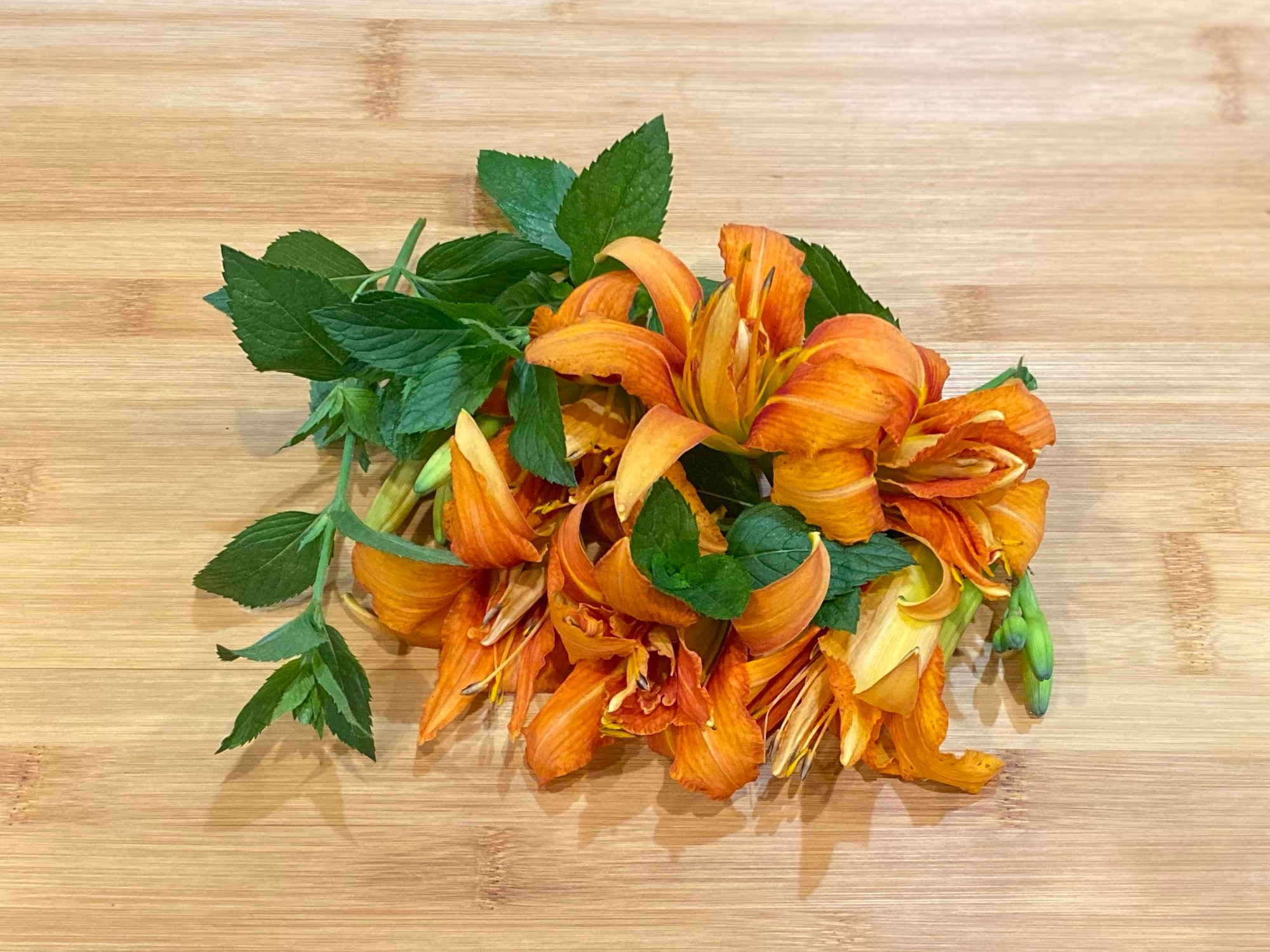
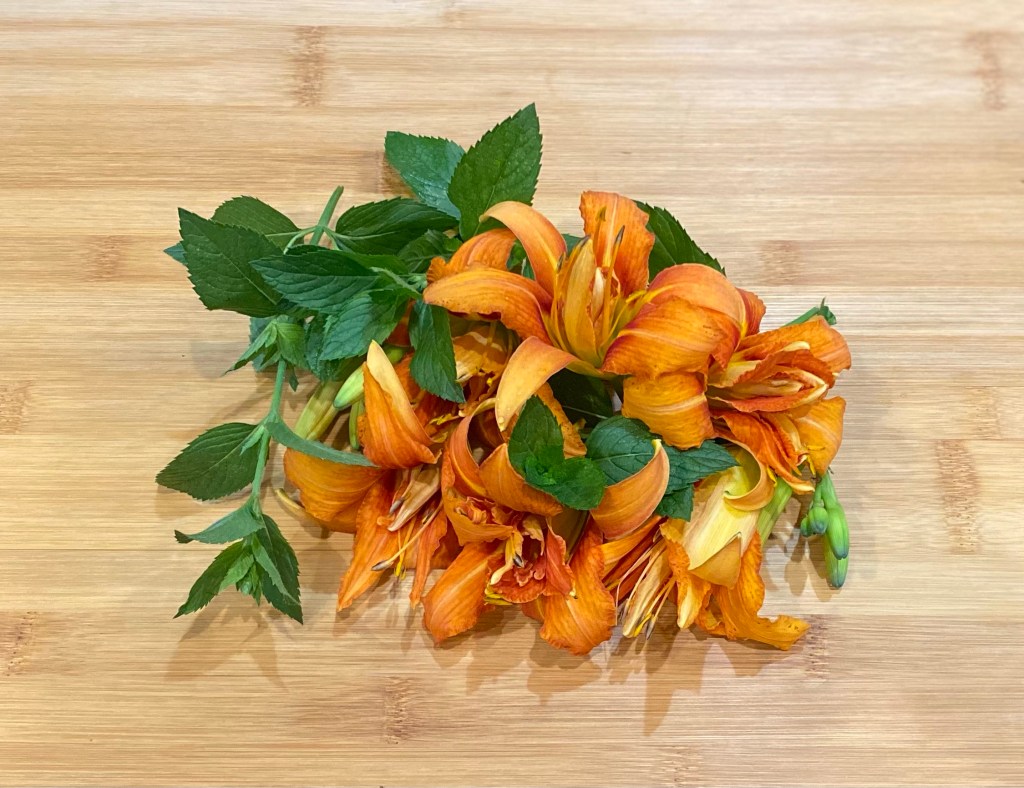
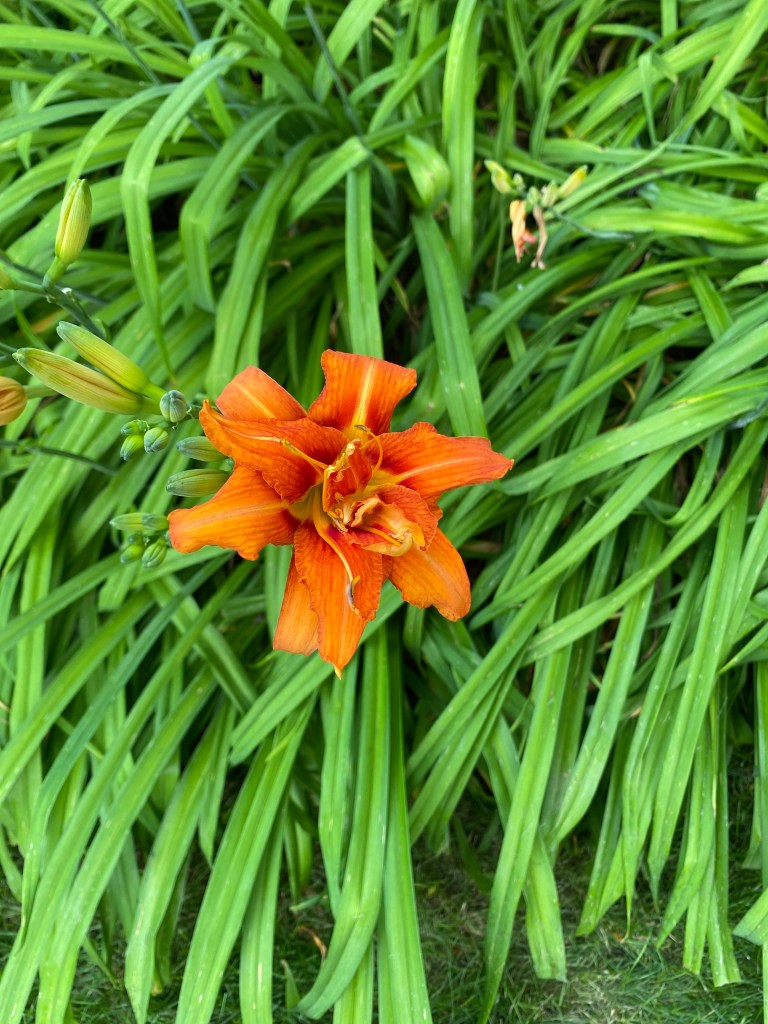
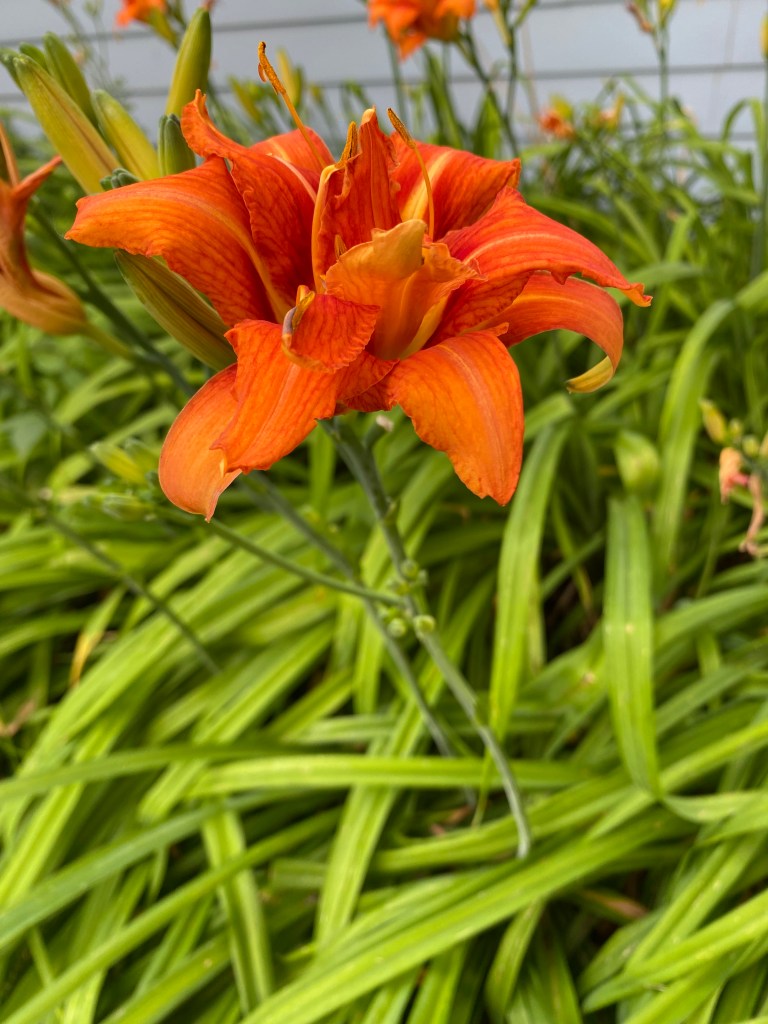
Daylilies are perennial plants, whose name alludes to its flowers, which typically last about a day. The flowers of most species open in early morning and wither during the following night, possibly replaced by another one on the same scape the next day. Some species are night-blooming. Daylilies are not commonly used as cut flowers for formal flower arranging, yet they make good cut flowers otherwise, as new flowers continue to open on cut stems over several days.[citation needed]
Hemerocallis is native to Asia, primarily eastern Asia, including China, Korea, and Japan. This genus is popular worldwide because of the showy flowers and hardiness of many kinds. There are over 80,000 registered cultivars. Hundreds of cultivars have fragrant flowers, and more scented cultivars are appearing more frequently in northern hybridization programs. Some earlier blooming cultivars rebloom later in the season, particularly if their capsules, in which seeds are developing, are removed.
Despite the name, daylilies are not true lilies, although the flower has a similar shape. Before 2009, the scientific classification of daylilies put them into the family Liliaceae. Unlike daylillies, which have a fibrous root system, Liliaceae species grow from bulbs and, if ingested, are harmful to humans and animals. It is a common misconception that daylilies share the toxic properties of true lilies.
In 2009, under the APG III system, daylilies were removed from the family Liliaceae and assigned to the family Xanthorrhoeaceae, subfamily Hemerocallidoideae. Xanthorrhoeaceae was renamed in 2016 to Asphodelaceae in the APG IV system.
Most kinds of daylilies occur as clumps, each of which has leaves, a crown, scapes, flowers, and roots. The long, linear lanceolate leaves are grouped into opposite fans with arching leaves. The crown is the small white portion between the leaves and the roots. Along the scape of some kinds of daylilies, small leafy proliferations form at nodes or in bracts. A proliferation forms roots when planted and is an exact clone of its parent plant. Many kinds of daylilies have thickened roots in which they store food and water.
A normal, single daylily flower has three petals and three sepals, collectively called tepals, each with a midrib in either the same basic color or a different color. The centermost part of the flower, called the throat, may be a different color than the more distal areas of the tepals. Each flower usually has six stamens, each with a two-lobed anther. After successful pollination, a flower forms a botanical capsule (often erroneously called a pod since botanical pods are found in Fabaceae, not Hemerocallis).
The orange or tawny daylily (Hemerocallis fulva), common along roadsides in much of North America, is native to Asia. Along with the lemon lily (Hemerocallis flava), it is the foundational species for most modern cultivars. (pictured above)
Although the buds and flowers are often used by humans in gourmet dishes, Hemerocallis species are toxic to cats and ingestion may be fatal. Treatment is usually successful if started before kidney failure has developed.[4]
Copied from Wikipedia
 Hopester Photography