
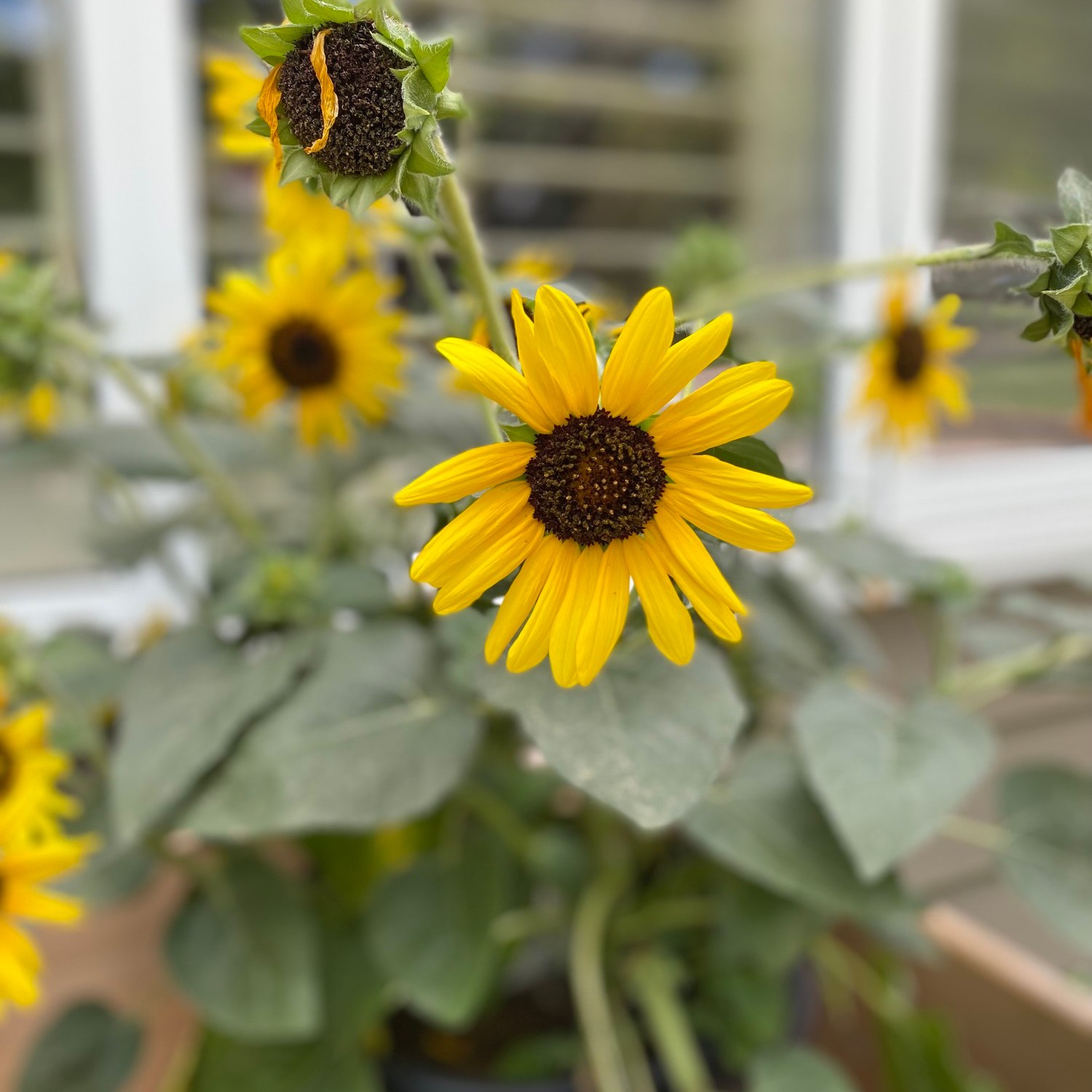
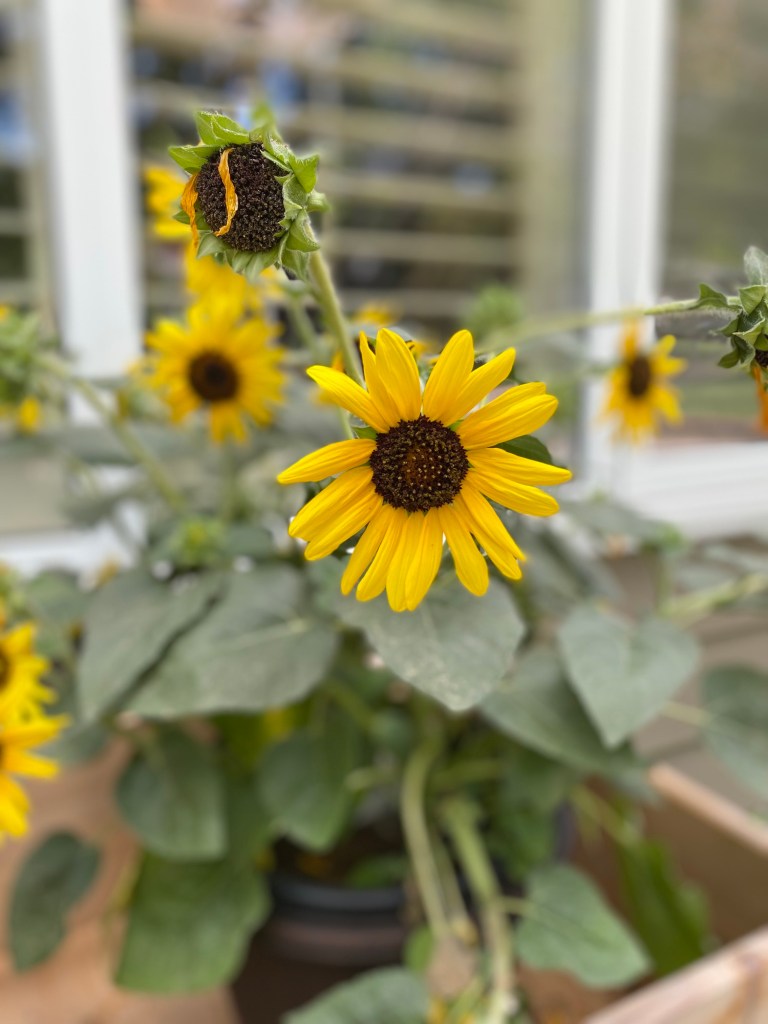
Helianthus (/ˌhiːliˈænθəs/)[3] is a genus comprising about 70 species of annual and perennial flowering plantsin the daisy family Asteraceae.[4][5]Except for three South Americanspecies, the species of Helianthusare native to North America and Central America. The common names “sunflower” and “common sunflower” typically refer to the popular annual species Helianthus annuus, whose round flower heads in combination with the ligules look like the sun.[6] This and other species, notably Jerusalem artichoke (H. tuberosus), are cultivated in temperate regions and some tropicalregions as food crops for humans, cattle, and poultry, and as ornamental plants.[7] The species H. annuustypically grows during the summer and into early fall, with the peak growth season being mid-summer.[8]
Several perennial Helianthus species are grown in gardens, but have a tendency to spread rapidly and can become aggressive. On the other hand, the whorled sunflower, Helianthus verticillatus, was listed as an endangered species in 2014 when the U.S. Fish and Wildlife Serviceissued a final rule protecting it under the Endangered Species Act. The primary threats are industrial forestryand pine plantations in Alabama, Georgia, and Tennessee. They grow to 1.8 m (6 ft) and are primarily found in woodlands, adjacent to creeks and moist, prairie-likes areas.
Copied from Wikipedia
 Hopester Photography